Dentures South Portland
The Trusted Fix for Tooth Loss

Tooth loss can happen for many reasons. Some are within your control and many are not, but placing blame isn’t our focus. For us, what’s most important is showing you that a complete smile isn’t out of reach. At Dockside Dental, our dentures can make your smile whole and strong again. To learn more, just keep reading or book a consultation today!
Why Choose Dockside Dental for Dentures?
- Made from High-Quality, Long-Lasting Materials
- Precise & Putty-Free Digital Impressions
- Judgment-Free & Compassionate Dental Team
Types of Dentures
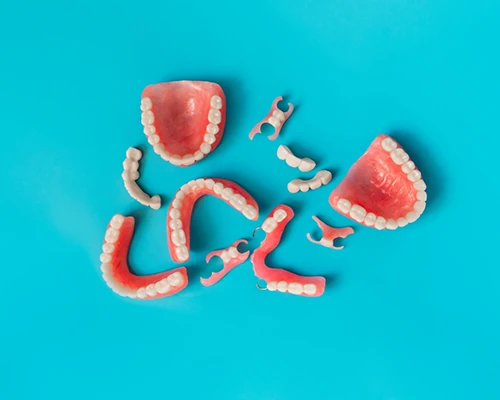
During your consultation, Dr. Barillas or Dr. Salamon will outline the types of dentures we offer. We will suggest one of three possible kinds for you, including:
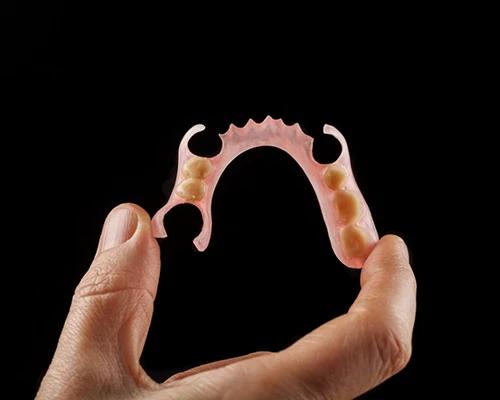
Partial Dentures
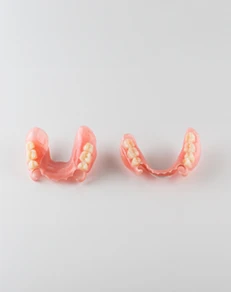
By its name, a partial denture only replaces a few teeth. It secures itself with metal clasps that attach to nearby teeth and includes an acrylic base. This latter part is gum-colored to ensure seamless results.
Full Dentures
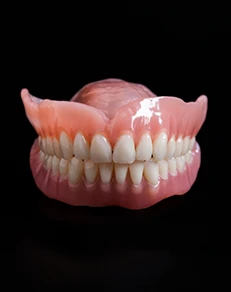
Unlike a partial model, a full denture replaces a whole row of teeth. That means it relies on suction to stay in place. As a result, the appliance doesn’t alter your remaining teeth much (if at all). Like a partial denture, a full one has an acrylic, gum-colored base customized to fit across an entire arch.
Implant Dentures
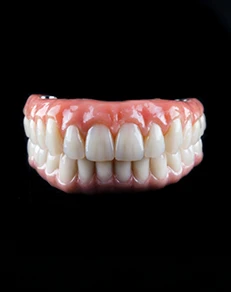
An implant denture is for patients who want the most stable option possible. To be specific, implant dentures use dental implants — replacement tooth roots. As these roots fuse with your jaw, they keep your face from sagging or collapsing. More crucially, they ensure your new teeth won’t slip or shift.
The Benefits of Dentures

- A Lifelike Smile – With modern dental technology, current dentures look and act like natural teeth.
- Easier Eating – Whether they’re implant-based or not, dentures help you chew food. They’ll expand your dietary choices and improve your nutritional health.
- More Confidence – Quality dentures tend to boost your confidence by filling in any gaps. You’ll then feel more comfortable among friends and family.
- Long-Lasting Results – Given the proper care, dentures can last around 7-10 years.
How Dentures are Made
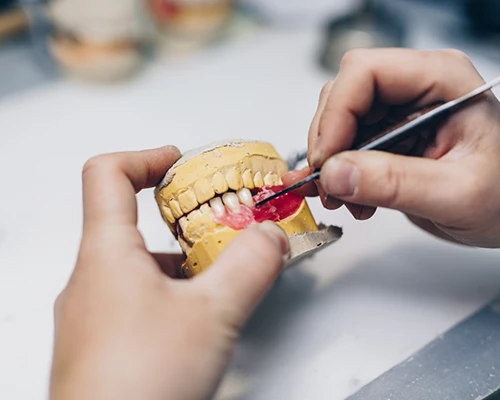
Customized according to the impressions taken of your mouth and the specifications provided by our team, these prosthetics are carefully crafted so that they fit comfortably and allow you to eat and speak without worry.
What are Dentures Made Of?
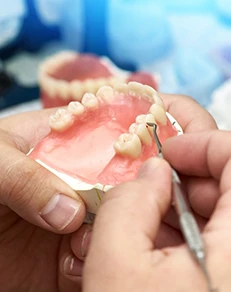
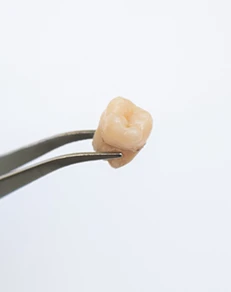
Two components make up a denture – the base and the artificial teeth. The base commonly consists of acrylic because of how easy it is to color-match it to the shade of your gum tissue. Its purpose is to support the artificial teeth that are attached to it, helping to create a natural-looking smile.
Artificial teeth are often made out of resin or porcelain because of their unique ability to mimic the look of natural tooth enamel. Porcelain is generally more popular, though, because of how it feels and its optimal durability.
The Denture Creation Process
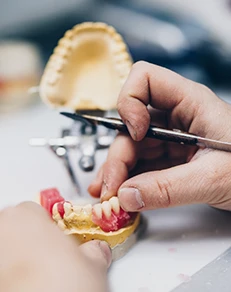
From start to finish, the denture creation process can take weeks or even a few months depending on whether you need a partial, a single denture, or a full set. It requires multiple steps, each of which must be completed successfully before moving on to the next.
After capturing an impression of your gums, we will measure your jaw and send it to a dental lab, where technicians will create a wax mold of your gumline. Artificial teeth are then placed onto the base before excess wax is removed to create a more natural gum shape.
We will receive the wax mold and perform a fitting. If you and our team approve, they will be sent back to the lab, and you will wear temporary dentures in the meantime.
A technician will boil the dentures to remove any wax before filling a flask with plaster that will hold the shape of your dentures. They will then be melted before small holes are created in the teeth, allowing the new material to properly attach. To keep the acrylic from sticking, a liquid separator will be added. Acrylic will then be injected into the flask to replace any wax.
Once the plaster is removed, the acrylic dentures are placed in an ultrasonic bath before the excess acrylic is trimmed off. With a final polish, they will be delivered to our office so that you can undergo your final fitting.
Adjusting to Your New Dentures

It is normal to experience some slight discomfort after having your dentures put into place. Some mild soreness is common. However, as your mouth begins to adjust, it will begin to feel like natural teeth. You can speed up the process by eating soft foods, exercising your facial muscles, and trying denture adhesive. If you continue to notice any discomfort, don’t hesitate to reach out to our office.
Understanding the Cost of Dentures
The cost of dentures depends on a few factors. During your consultation, our team will be able to share some specific numbers with you and talk to you about your payment options. Dentures are one of the most cost-effective forms of tooth replacement, and most patients are able to manage the financial side of their treatment without too much stress.
Factors That Affect the Cost of Dentures
Some factors that can have a bearing on the cost of dentures include:
- Preparatory treatment: Some patients require tooth extractions, gum disease therapy, or other procedures before they can move ahead with tooth replacement.
- Quality of Material: Dentures usually consist of an acrylic base along with porcelain or acrylic teeth. The prices for these materials can vary depending on their quality, their manufacturer, and more.
- The type of denture: Full dentures, partial dentures, and implant dentures all have different price points.
Are Implant Dentures More Expensive?
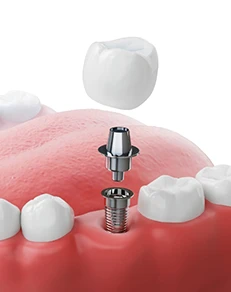
Yes, implant dentures cost more than their traditional counterparts. That is because the treatment process requires more time, effort, materials, and skill than what is involved with regular prosthetics. Are implant dentures worth their higher price? Most patients would say yes. Not only are they extremely sturdy and lifelike, but they also last a long time. In fact, dental implants can last for decades, whereas a traditional denture may need to be replaced much more often. Therefore, implant dentures actually present a better long-term monetary value.
Does Dental Insurance Cover Dentures?

In most cases, yes, dental insurance does cover dentures. Most insurance companies classify this treatment as a major procedure, so around 50% of its cost might be covered, up to the amount of your plan’s annual maximum. Our practice welcomes insurance. We will be happy to help you figure out how you can use your benefits in your office and file all necessary forms on your behalf.
Other Options for Making Dentures Affordable

Aside from insurance, we offer flexible monthly payment plans through third-party financiers, Cherry and CareCredit. If you would like to learn more about the cost of dentures in South Portland, our team is eager to answer your questions. Get in touch with us today to book a consultation.
Dentures Aftercare

Your new dentures have the power to improve your life by completely transforming your smile’s appearance and functionality. However, even if you have no natural teeth remaining, you must continue to maintain daily oral hygiene. Because your prosthetics are pressed against your gums all day, bacteria can thrive and cause oral issues like gum disease, which can affect your jawbone if left unaddressed. That means caring for your restoration correctly is essential to keeping your mouth happy and healthy.
Continue reading to learn a few helpful tips for keeping your dentures in tip-top shape, and feel free to contact us for more information.
Removable Dentures
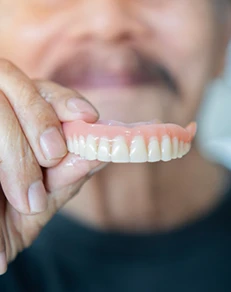
Remove After Eating
Little pieces of food you’ve eaten are prone to clinging to your artificial teeth. Over time, this can create a layer of plaque that can cause gum disease and leave your dentures smelling unpleasant.
To keep them fresh after meals, remove them and gently rinse them under running water for a few moments. Remember to use a cool or lukewarm setting because overly hot temperatures can warp the acrylic, causing your prosthetics to no longer fit.
Clean Your Restoration
Some patients wonder if they can brush their dentures in their mouths, but doing so means that you’re not washing all their surfaces for a thorough cleanse. Instead, you should remove them twice daily (morning and night) to gently brush them with a soft-bristled toothbrush and mild dish soap or special cleanser. Standard toothpaste can be abrasive on the materials, so try to avoid it. Then, floss them to remove any plaque or food debris.
When you’re done, rinse them thoroughly so you don’t put toxic cleaning materials or soap into your mouth.
Keep Your Dentures Safe
Your restoration can become slippery when you wash it, and if it tumbles out of your fingers, it can become chipped, cracked, or broken. Try placing a soft towel beneath you during cleanings so that they land on a softer surface if they take a fall. Also, try to store them out of the reach of pets and children.
Remove Dentures When You Sleep
Your dentures rely on tight suction against your gums to remain firmly in place, which can strain the tender tissues or cause sores to develop. To give them a break, you should take them out of your mouth to sleep at night.
Placing them in a glass of water or a special cleaning solution overnight can eradicate up to 99% of unwanted germs. This method also ensures they stay moist to retain their shape, preventing the acrylic from drying out and cracking.
Notice Changes
It’s important to pay attention to spot early indicators of potential problems before it’s too late. For example, if you notice that your gums look redder or more inflamed than usual, you can call our team to schedule an appointment to check for gum disease.
Also, if you see signs of wear and tear or damage to your dentures, don’t attempt to fix them at home. Many household substances, like super glue, are toxic and shouldn’t be placed in your mouth. Our team has the experience and equipment to repair or replace your restoration safely.
Dentures FAQs
What Type of Denture Adhesive Should I Use?
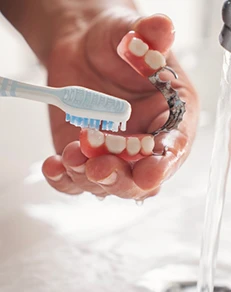
You can choose from multiple different types of denture adhesive. The best one will be the one that you like to use the most! Below, we’ve outlined the different types of adhesive you can purchase alongside their pros and cons:
- Creams: Adhesive creams will provide you with reliable, all-day hold and help prevent food from becoming trapped between the prosthetic and your gumline. They’re also a great option if you have gum sensitivity. However, they can be a little messy to use while you’re still learning how much you need.
- Powders: Adhesive powders also offer a reliable hold that can last for up to 12 hours. It’s easy to sprinkle but can be messy.
- Strips: Lastly, denture adhesive strips are simple to use and drastically less messy than their cream and powder counterparts. Because they’re pre-cut to fit your denture, you won’t have to worry about applying too much adhesive. However, they aren’t able to seal out as much food debris.
My Dentures Feel Like They Don’t Fit Right. What Should I Do?
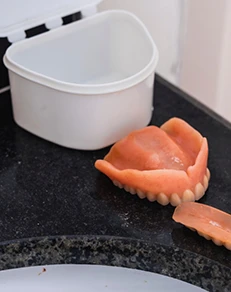
If you’ve had your dentures for several years now and feel like they don’t fit like they once used to, it may be time to get them either relined or replaced. Using ill-fitting dentures can put you at a higher risk of developing oral sores and infections, which is why our team recommends keeping a close eye on your oral symptoms to make sure your dentures continue to function well and remain comfortable.
Can I Sleep with My Dentures?

If you have full traditional dentures, it’s important that you take them out before bed and store them in a glass of room temperature water. This will help them maintain their shape as well as give your gums much-needed rest, allowing blood flow to return and preventing irritation. If you have partial dentures, it’s still a good idea to give your gums a rest by taking them out and storing them in their hard protective case. For those with implant dentures, removal isn’t necessary since they’re permanently affixed within the mouth.
Is It Hard to Talk with Dentures?
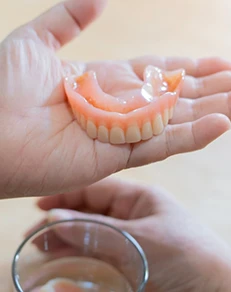
It can be difficult to talk with dentures in your mouth at first, as you’re still getting used to the way they feel. However, after about 30 days, you should feel much more confident speaking. To speed up this adjustment period, our team recommends practicing reading aloud to yourself and even talking to yourself in the shower or while you’re cleaning!
Are There Any Foods I Should Avoid Eating with Dentures?
Dentures don’t restore your bite force completely, which is why we recommend being mindful of the foods that you eat. If you’re eating chewy proteins like chicken or steak, be sure to cut them into smaller, easy-to-chew pieces. We also recommend avoiding foods that are excessively crunchy or chewy.
I Need a Checkup & Cleaning I Have a Cavity or Broken Tooth I am Missing One or More Teeth I Want to Enhance My Smile I Want a Straighter Smile I am Scared of the Dentist's Office I Have a Dental Emergency I am Worried About Gum Disease I Have Jaw Pain & Headaches I Snore/Have Sleep Apnea View Our Services